Sunday, November 25, 2012

Why I Wouldn't Freeze My Brain and What I Want My Child To Be


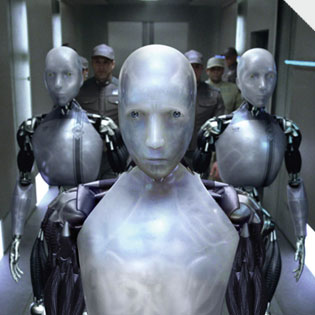
 It just sounds so farfetched to me. The idea of genetic engineering becoming so advanced that a plethora of possibilities become available to human kind. The idea of living forever, being faster, stronger and smarter than any of our other predecessors merely through a chip in the brain or a bolt in a joint…
It’s so easy to dismiss it as a thing that’s better left to science fiction novels and t.v shows.
Then again though, if you were to tell a person a few hundred years ago that a device the size of your palm would allow you to communicate with someone on the other side of the world, they would’ve looked at you like you were a nut and possibly, depending on where you were in the world, convict you of heresy or witchcraft.
So maybe a distant future of men who can run 100 yards in under 5 seconds, or workers that can function with no sleep or people who live well past what their natural limit isn’t so distant after all.
Ray Kurzweil’s article “The Six Epochs”, in a nutshell, documents the exponential evolution of human kind coupled with the advancement of technology and how the x-axis of mortality and y-axis of science will soon enough converge into full fledged fusion.

Cybernetic bags of meat. That’s the image that I think of. I guess that’s far too pessimistic. Nor is it how I truly feel about Transhumanism. In fact, I applaud scientific advancement. Anything that will better the lives of people is good in my books. But what doesn’t rest easy with me is the philosophical, moral and ethical ramifications that come about. I guess you could think of me as a fence sitter. I’m all for test tube emotions and super computer-esque brain power, but I guess I wouldn’t want to experience it for myself. That, I do believe, is generations to discover, explore, document and enjoy. While I appreciate the idea of it, I don’t think I want to be a part of a transhumanist world. In transhumanism all I see is the further stratification of society, the depreciation of human life and questions being raised that blur the line of right and wrong to a shade of grey that is unprecedented in human history. A shade of grey which no one will be able to understand. The tension between humankind caused by its supposed betterment isn’t something id like to face or be a part of. If cybernetic humans were to co-exist with regular humans, would it not create an us and them mentality? Race would no longer be a factor, but rather how much machinery you have in your tendons. A superiority complex would develop and prejudice would rear its unwelcomed and familiar face towards a different target. All humans are created equal, according to the United States. But what would constitute a human?


On the other hand, I want my son to have brown hair, brown eyes, to be half Filipino, half Caucasian. I want home to grow up to be six foot and one inch tall exactly. I want his shoe size to be ten and a half and I want him to be inclined towards spontaneity and outgoingness. I don’t want him to be reserved, but rather quietly outspoken and I want him to be smart. Not too smart, but smart enough that he’s successful and is able to one day genetically map out his own son too. This, I feel, is the best way my son will be able to face a transhumanist future. A society of perfect individuals, where flaws are erased and the capacity for creation and advancement has overridden our tendency to destroy. Where the old can feel young again and wear the disable become able. A world where everyone is a perfect individual, united by a microchip and bonded by steel. This is the part of transhumanism that I do appreciate.

For now, I still unabashedly sit on the fence. So no, I wouldn’t freeze my brain if I were given the choice, rather I’d give that privilege to my perfect six foot one son.

Sunday, October 21, 2012

I HATE HIPPIES

-->
Since when did Globalization become the devil? Progression and evolution is all of a sudden a curse and everyone seems to think that universal culture merely eliminates indigenous culture.

It’s not cultural imperialism you neo-liberal bigots. You all annoy me.

It’s called development.


McDonald’s is great. Everyone needs to admit it. The spread of good fast food internationally is not the only positive of an emerging culture. I mean there’s still Starbucks to be thankful for, with caffeine being the sweet nectar of every nine to fiver, including the people who criticize it.

There are a number of other positives too, of course. One has to consider the possibility that the disappearance of indigenous culture is a natural occurance; that the whole idea of McWorldianism is brush out what is backward, what is no longer functional, and instead replace bazookas and hymns with pretty lights and conveyor belts.

Unity is strength and of course sharing is caring. Globalization increases resource availability. With more international ties between countries and Multinational Corporations, the trading and spread of resources has resulted in benefits for the consumer who are now able to obtain assets that were once unique to particular countries. This is evident even in history like China’s silk road. Their trading resulted in a strong economy, foreign goods, international alliances and ultimately a stronger kingdom. Now imagine the silk road on anabolic steroids and you’ll find that not only do individual countries and their citizens benefit, but the world as a global nation does too.

Globalization reduces poverty too. Growing international ties are allowing companies to outsource employment granting employment opportunities to those who suffer economically. And I’m not talking telecom call centers with Indian employees, but also menial work, managerial positions, factory work and other forms of labour in the production process. Poorer countries often have ore opportunity for industrialization and the construction of infrastructure, which in turn would also provide a number of other employment options. After all, a low-paying job is better than full-blown poverty


Hey guess what Globalization also does? It makes people S-M-R-T through edumacation. Again this is a prime example of western culture benefiting the disadvantaged. The diffusion of knowledge reduces the gap between the haves and the have-nots. Knowledge is power as they say. And as a nation develops, the need for specialization and educated individuals increases which in turns results in more education facilities and the spread of information. Being literate is great, but being able to do something with it is even better.


Now this is the point in the argument where the neo-liberalist psychos reinforce their idea that “ermagawd but indigenous culturez r b3ing erased”, well ask yourself this hippy, some indigenous cultures also condone violence and the violation os basic human rights (like broadband internet as declared by the UN).
Globalization leads to the awareness and protection of human rights. As a nation develops, the international crosshair is aimed at a nation’s bullseye. This global firearm of justice and peace causes reigning regimes to essentially falter under pressure and succumb to the scrutiny, resulting in a rework and rethinking of backward (dare I say indigenous hahahahahahahaaha) policies to allow basic rights and freedoms for their citizens (no time for examples but see: China, Iraq and basically like, all of Africa).

There are a plethora of other examples that I can cite that reinforces the positives of Globalization including:
*Improvement of technology and transporation
*The movement of people and capital
AAAAAND…
*Dissipation of cultural violence and tension


You’ll also notice I did not cite or link any other websites or blogs in this post…this is because the benefits of Globaliztion are part of common sense… collective knowedge. It is clear to see That we should not criticize the big mac, but rather firmly grasp it between our fingers and take a big chunk out of the meat patty of unity.
It’s either that or be left behind.


Sunday, October 7, 2012

Beyoncepedia.

I freaking love Wikipedia. Like legitimately.  If I had a dollar for every the ol’ wiki has saved my ass from a fail grade I would have like ten thousand dollars. Maybe even more. It epitomizes what the internet is: a humungus user-generated database, free of charge, spreading knowledge and information to everyone who chooses to access it.
And it’s not even a matter of just copying and pasting information into a paper. Wikipedia has actually HELPED me to understand what the flying cockatoo is going on, say for example, when a reading is too dense (cough, Herodotus…) and I just want the jist of what some old fart wrote.

But seriously, if Wikipedia were ever to be personified into a woman, Wiki would be the spitting image of a “Déjà vu”, “Irreplaceable” era Beyonce (circa 2006, hot damn).


Having said that though, it seems a lot of educators don’t share my love for Beyoncepedia, or research dependent on the internet for that matter. The times have changed, professor. Face the facts: the internet is a powerful tool that can, no, MUST be utilized by students to further their education.

The internet is our generation’s printing press, and hardcover elitists can step over “to the left” (brownie points are up for grabs if you caught that one guys.)

For the purpose of this post, I’m just going to assume that everyone agrees and move on to a more pressing matter. The problem is no longer “can the internet be trusted as a source” but rather it is now a matter of “what on the internet can I trust, and what on the internet do I dismiss?”
Is there a criteria? A check list? A rubrick which determines whether or not a webpage is spouting legitimate information or is the work of a 28 year old who lives in his mum’s basement.
Instead of using the internet as an example, lets take a small case study to provide an illustration.
Lets use Wikipedia.

Wikipedia states that Wikipedia:

“In a departure from the style of traditional encyclopedias, Wikipedia is largely open. This means that, except for particularly sensitive and/or vandalism-prone pages, which are "protected" from some degree of editing, the reader of an article can edit the text as he or she sees fit, anonymously or with a user account... No article should be owned by its creator or any other editor, nor vetted by any recognized authority. Instead, editors should agree on the content and structure of articles by consensus”

Consensus. Popular opinion. So what if the general consensus is wrong? This quickly, exponentially becomes a post-modernist argument then. All of a sudden the line between fact and fiction is blurred. All of a sudden history is now an open book, constantly re-written and edited to suit the perspective of the people. 


One would argue this automatically dismissed the validity and reliability of Wikipedia (remember, the Internet) which would be enough grounds for professor’s to discourage, even ban in some cases the use of Wikipedia as a source for research assignments. But again, I would argue that this cannot be so.

For a professor to tell a student he can’t use Wikipedia is like telling a mechanic he can’t use a power drill because it runs out of battery.

…That’s not a very good image but the point im making is that a student should be able to have the power of choice when deciding what tools and resources to use despite perceived flaws in the said tool or resource.

Not only this, but there are number of other reasons why we should trust Wikipedia.

If you think about it, the whole open editing thing is a double edged sword. It may act as a deterrent to the truth due to inaccuracy or differing opinion, but it can also be thought of as the most comprehensive peer reviewed body of information. If a discrepancy is found, a more qualified editor can come along and change it. If wrong information is posted, it can be merely deleted and replaced with the correct information by someone who knows what they’re talking about. Not only this, but every major claim on EVERY Wikipedia article is cited and a direct link to the source is found at the bottom of the page.

Unlike books, which can be outdated over the span of 365 days, Wikipedia is able to keep up to date with the times, which means it presents the LATEST information, as its discovered or is unveiled which means it doesn’t age and its information will always be applicable.

Furthermore, WIkipedia has implemented its only rules for moderation when it comes to the validity of articles. Wikipedia states the following are a good way for judging the reliability of an article

·       Appropriateness of the images provided with the article
·       Appropriateness of the style and focus of the articles
·       Susceptibility to, and exclusion and removal of, false information
·       Comprehensiveness, scope and coverage within articles and in the range of articles
·       Identification of reputable third-party sources as citations
·       Stability of the articles
·       Susceptibility to editorial and systemic bias
·       Quality of writing

Oh, there’s that checklist that we were looking for !

So what’s my point? Well the point is information technology is changing  the way students are learning and writing. Professor’s do not necessarily have to alter their pedagogy and adopt a fully progressive philosophy. I’d be happy if more Professor’s would just recognize the merit of the open source that is Wikipedia, or as a whole, the Internet. It provides more merits than negatives and information, knowledge, is power. Students are in charge of their education. Not the professor.

And deciding to skip the 100 page Thucydides reading and choosing rather to read the synopsis on Wikipedia is perfectly fine.

Sunday, September 23, 2012

"Do the right thing, you must", says Yoda.

-->


I’m walking around the desert of Tatooine as a jedi equipped with a blue light saber and a master control of the force. A jawa steals some jewels from me. Cue the dramatic music and an intense chase scene through the sand. I use all my abilities, anything in my arsenal, to corner this pocket sized humanoid in a hood. Finally. A dead end. My light saber ignites and all of a sudden I’m faced with a choice: do I kill him or do I let the little guy go.
I sit there with my thoughts for a moment, weighing up each option on my moral scale. Several strokes of my chin and scratches of my head later I eventually click on the option to let him go. I lost some cash, but I gain this overwhelming feeling that I’ve done the right thing.

Crazy right? A bunch of pixels on a screen could actually spark me to question my values and assess my own moral fiber. Nothing would’ve happened to me if I killed him, likewise nothing happened when I let him go. So the question is…

Why did I let him go?


The moral code game model is an increasing component of video games today, allowing players direct control of how a story plays out and what type of journey they take their character on. Continuing prominence of such a feature only attests to the value that these games are and how much players are enjoying them. It seems like people like their morality poked and prodded and their heartstrings tugged and pulled.

Playing games that involve moral choice as a main component engages players causing them to learn about their personal values and moral standards.

Dan Staines and Malcolm Ryan  outline the moral code game model. A moral choice works in four stages.
Moral Motivation
Moral motivation is the impetus to act on our judgement, the desire to do the right thing. It is about cultivating an ethical identity which values courtesy, honour, generosity and fairness. Without these qualities, judgement lacks motivational force and will seldom result in action.
Moral Sensitivity
Moral sensitivity is the ability to discern that an issue is moral in the first place and recognise how it might be interpreted by different participants. It involves a number of skills including the ability to connect to others and understand their perspectives. Communication (both speaking and listening) is a key skill of moral sensitivity, as is the ability to recognise and control one’s own social bias.
Moral Judgement
Moral judgement is the act of determining a proper course of action in a moral situation. This is the component that we are most familiar with. It requires skilled reasoning and the ability to identify and employ different judgement criteria. It also requires the ability to predict and evaluate the possible outcomes of our actions to plan our behaviour.
Moral Action
Moral action is employing the skills to carry out the solution. Skills of moral action include the ability to negotiate, to solve interpersonal problems, to take initiative for action, and to show courage to persevere in the face of obstacles.
The model works off the basis that each player is inherently good. This is a broad, sweeping and, some may even argue, false assumption, but data collected by developers have proven, at least statistically, that it is correct.

In an article by Stefanie Fogel Telltale Games senior director of marketing Richard Iggo says “Some of the stats we’ve seen coming back from player decisions have created a perception that even in dire times – and when faced with no-win situations where each decision is morally gray – the majority of people will try to do the ‘right’ thing if they can.”

So, according to Iggo, we see that players have a strong sense of moral motivation. But this does not necessarily answer the question of why players are deciding to do good by these pixelated characters.

In my last blog post, I talked about players using the internet, or, more specifically, online gaming, to either re-invent themselves or express their ideal selves. Perhaps the moral aspect of games is allowing players to exact their “ideal” selves.

According to psychologist Carl Rogers people are made up of two aspects: the ideal self (who we want to be) and the real self (who we actually are). If there is a difference between the two then it can lead to two options: Someone can attempt to unify their real self with their ideal self or turn to a form of escapism: whether it be drugs, alcohol or in this case gaming.
These games are allowing players to exact both scenarios. They are able to escape but also acquire the standards of their ideal self by living vicariously through the character that they control.
And this is where all the quantitative data is thrown out the window. You can’t measure morality. You can’t measure choice. You can’t put right and wrong in a table. And you can’t add a percentage to feelings.

Games are causing players to question who their “ideal self” is, and to what extent the variance is between the ideal and the real. Not only this, but game developers are allowing them to exercise this notion of the ideal self and completely control the pathway that a game character takes: essentially adopting a second life.
Often people focus on the cognitive and reactionary skills that video games offer, or the psychological disadvantages of gaming due to its often violent or distracting nature.
However, rarely are the psychological positives ever mentioned. Games employing the morality model are allowing players to learn about themselves, what they value, what they hold dear and how far they are willing to push the ethical line towards the virtuous or towards the evil.

I guess the jawa thief can thank his lucky stars that my ideal self isn’t an asshole.

Sunday, September 16, 2012

Play With My Pussy...Cat


Imagine your friend sets you up on a blind date at fancy restaurant that has decorated silver cutlery and won’t let you in unless you’re wearing dress shoes. Each table has a candle, little flames dotting the spacious plaza like fireflies. You arrive early, out of courtesy of course, and wait eagerly as you browse the wine menu, twiddling your thumbs and tapping your right foot. In walks the girl, she’s attractive enough, not “giggity giggity” hot or gut wrenchingly ugly, so you decide to stay rather than to fake an emergency phone call from your great aunt about the death of your 3rd cousin.
You introduce yourself.

“Hi I’m ….”

She smiles politely, and says this:


Before I get going, there’s nothing wrong with cats. They’re great. But to be moved to tears by cats is such an oddity that Debbie’s e-Harmony video has garnered over 22 million views on YouTube. It’s not something you’d say to someone on a first date, right? So why is she comfortable saying it online?

The digital age has allowed for a nifty trade off when it comes to communication. Computers, the internet, instant messaging, skype or whatever has made talking and interacting with other people easier and more readily available. The plus side is that it allows for a “social defense”. There is safety behind the screen. One is able to say what they feel and do what they want without any social repercussions such as, say, rejection, a slap across the face or a kick to the crotch. Yes, you are communicating with other people, but are you really “connecting” with people or just to your router?

The continuing advancement of technology and digital culture is leading to drastic changes in the way we communicate. This can be seen most prominently in aspects of online gaming.

Matthew Dekneef in a Thought Catalog article sums it up perfectly:
I’m a comprehensive and instant means of self-expression. You’re building a fluid identity on me, ideally an irl reflection of you. Eventually, you may seem so real and cool you might even be impressed by you.

The internet allows people to present themselves in anyway they feel comfortable, free from direct ramifications of the people that they interact with. A number of Massive Multiplayer Online Role Playing Games (Abbreviated to MMORPG’s) have arisen, allowing consumers to enter a fantasy world through an avatar that they are able to customize and create. The player is able to then live vicariously through the avatar (which may be an orc, an elf, a wizard, assassin, etc) which is able to kill, die, buy, sell and interact with others. Some games have even begun the inclusion of real world currency into the buying and selling of items into the fantasy world, further blurring the line between real and virtual for players. 


Nick Yee discusses the motivation for playing, highlighting the fact that the games allow people to escape the mundane and are able to expand their social circle exponentially through the online universe.
Essentially, the games serve as a catalyst wherein the players are able to present themselves holistically within the virtual universe, or completely reinvent themselves. This serves to aid the socially handicapped.
In a discussion taking place on a forum a man writes:
I am a nerd. The internet has improved my social skills by putting me in touch with bazillions of people interested in similar eccentricities.”
Another comments:
“The internet helps because it means I can take in conversations at a more measured pace, and can switch them off easily and without causing offence if they get too overwhelming.”

This social comfort that people can experience is, obviously, not able to be translated into the real world. When one becomes acclimatized, used to, this form of communicating, it can prove detrimental in “real life”.

Another user rebuts that the internet is a “poor substitute” for real world interactions.
And arguably so. One is not able to take conversations at a measured pace or merely shut a conversation down if it gets dull. A dependence on the “social security” that the internet offers can prove to be detrimental.

In an article by Holly Ojalvo, She quotes Abigail Moore who comments that “the reliance of cell phones and internet is helping people avoid uncomfortable situations”. This may sound nice, but the communication breakdown that is caused by such reliance may eventually lead to negative effects and further friction down the road.
Essentially, not only is the internet and technology allowing people to change themselves, but its also change the way that they express their feelings.

Online gaming is merely one example of the way continuing advancements in technology and digital culture is changing the way that people communicate with each other. It can either be seen as a communication aid or detrimental to “real world” inter-personal skills but one cannot doubt the evolution of communication.

We can either deny it or embrace the change and tell the whole world that we love cats.